

The digital rat race
The promise of Generative Artificial Intelligence is seductive: instant code, solutions in seconds, and skyrocketing productivity. But for project management roles, this raises an uncomfortable question: if machines don’t get tired, do we expect our human teams to keep up with that pace? In this productivity boom, XP’s “sustainable pace” is the only guarantee that your team won’t implode from burnout.
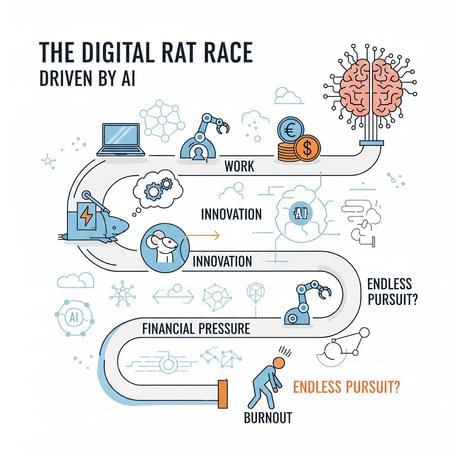
This is where Extreme Programming (XP) comes back into the spotlight, not as an engineering methodology, but as a manifesto for human sustainability. Paradoxically, to move at AI speed, we need the safety brakes and psychological well-being that Kent Beck designed in the ’90s.
How does XP ensure well-being in “high-speed” environments?
Unlike other agile frameworks that sometimes turn into a “ticket factory,” XP has explicit principles around team mental health. These are not HR suggestions—they are strict technical rules.
- The Sustainable Pace rule
XP explicitly forbids heroics. The premise is simple: a tired person introduces more bugs in one hour than they can fix in two. XP states that if overtime happens one week, it’s an exception. If it happens two weeks in a row, the problem lies in the plan, not the team.
- Psychological safety (the value of “courage”)
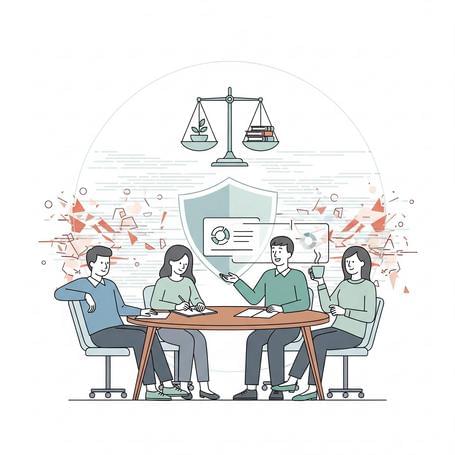
XP requires the courage to say “no” or “I don’t know”, but it also requires leadership to respect and listen to that truth. By eliminating fear-based estimation and replacing it with “accepted responsibility”—where the person doing the work estimates the work—anxiety around unrealistic deadlines is drastically reduced.
- The end of the “lone wolf” concept
Through Collective Code Ownership, XP removes the stress of being “the only person who knows how this works.” If someone gets sick or goes on vacation, the project doesn’t stop—and no one has to take emergency calls from the beach.
Is AI the end of Pair Programming or its rebirth?
One of the most controversial XP practices has always been Pair Programming (two people, one computer). With tools like Copilot, ChatGPT, Windsurf, Cursor, and many others, many managers ask: “Why pay for two people if I have AI?”
To the question of whether AI will replace developers, we can respond with an analogy: “Autopilot in airplanes has been around for decades, optimizing work—but it has never replaced the pilot. Why is the human factor still necessary?”
In software teams, we cannot rely solely on Vibe Coding (just as we cannot rely only on autopilot in aviation).
Vibe Coding produces code that seems to work but is incomprehensible and ultimately unmaintainable, leading to production failures due to lack of human oversight, with much higher long-term cost and impact.
To avoid this scenario, XP proposes a crucial evolution:
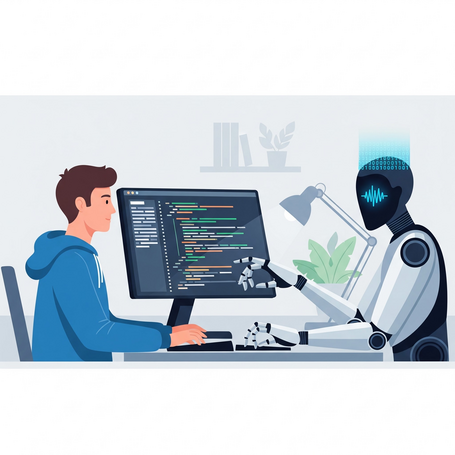
- From “Driver and Navigator” to “Cyborg Pairing”. AI doesn’t replace people—it elevates the pair. In this new model, AI acts as a “learning accelerator” for junior profiles, reducing the time spent searching for information—but (and this is critical) without removing the need for human validation.
- The danger of “Vibe Coding”. Martin Fowler and Kent Beck warn about the risk of accepting AI-generated code just because it “seems to work.” XP acts as a counterbalance: human Pair Programming remains essential for strategy and architectural design—areas where AI tends to hallucinate or introduce complex technical debt. AI writes, humans navigate, and XP sets the traffic rules.
TDD: why work twice as hard to go faster?
XP requires writing the test before the code (Test-Driven Development).
- TDD is not a testing technique—it’s an anxiety management technique. Knowing you have an automated safety net that alerts you in seconds if something breaks gives the team “extreme” confidence.
- AI excels at generating tests. Using AI to generate the TDD test suite before writing the code is the ultimate productivity hack. It turns AI into the strictest quality gatekeeper.
The death of documentation (as we know it)
XP has a reputation for lacking documentation, which is false—but it stems from breaking away (with the Agile manifesto) from the traditional approach of the ’80s (pages and pages of documentation rarely used).
- XP relies on clean code practices and self-explanatory code that others can understand without context.
- Today, AI tools can read XP’s clean code and automatically generate business documentation. But this only works if the team follows XP’s discipline of “Simplicity” and proper naming. If the code is a mess, AI will document a mess.
Conclusion: returning to the human to survive the artificial
In the age of AI, speed is a commodity. Anyone can generate code quickly. A team’s competitive advantage is no longer how much code it produces, but its ability to maintain it, adapt it, and—above all—avoid imploding from burnout in the process. XP is the methodology that reminds us that software is built by people, for people.

David García Luna
I started as a developer, learned the ins and outs of SEO, and stayed in the agile world for one reason: I like things to work—but above all, I care about people doing well. My mission is to create environments of trust where metrics speak for themselves and obstacles disappear. I’m the bridge that translates technical needs into business value without losing anything along the way. An aviation and data enthusiast, I’m always ready for a new destination whether it’s a complex project, a long trip, or a great conversation over a few beers.
View more of David.More thoughts about this.
Read more.
Why should your teams be multifunctional?

The power of the Goal Sprint.
The Scrum room: how to improve transparency within your team.
The offices of the Future.
Comments are moderated and will only be visible if they add to the discussion in a constructive way. If you disagree with a point, please, be polite.

Tell us what you think.