
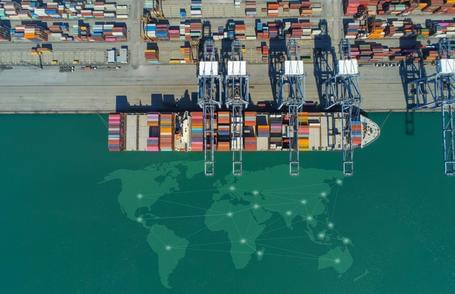
The autonomous orchestration shift
If your supply chain still plans in monthly cycles and signs off decisions in weekly meetings, here’s the bad news: your competitors already make those decisions with AI agents under human oversight. Worse: the data says it works.
Spend on supply chain management software with agentic AI will grow from under €1.8Bn ($2Bn) in 2025 to around €46Bn ($53Bn) in 2030 [1], and Gartner predicts that by 2031, 60% of supply chain disruptions will be resolved with little to none human intervention [2]. This isn’t a fad. It’s a paradigm shift to autonomous orchestration, combining processes, people and ways of working with AI.
First, let’s bust a myth: automating is not delegating. Automation replaces repetitive tasks; delegation hands over operational decisions (and, increasingly, strategic ones) to systems that can sense, reason and act within defined guardrails.
Traditional plan-review-correct cycles are giving way to near-real-time decision networks run by cognitive agents. In this model, supply chain stops being a cost center and becomes an engine of dynamic resilience: it captures margin in real time by adjusting prices, flows and inventory in volatile markets, instead of documenting the problem three weeks late.
Just another fad? If you’re wondering, here’s why it’s real: 2 in 3 companies plan to make significant progress toward autonomy over the next decade [7], and 69% of surveyed operations executives admit that failing to adopt AI will put them at a competitive disadvantage.
The uncomfortable truth: only 28% have a low-touch supply chain today [16]. Walk the talk is the next real battleground.
numbers
Function by Function: Where Autonomy Already Delivers Value
End-to-end autonomy isn’t something taken for granted. It’s built brick by brick tying every investment to each function’s pain point to address. Here’s what the evidence supports today, function by function, with examples:
- Planning (S&OP, forecasting). Traditional statistical forecasting, as we know it today, is dying: 70% of large organizations will adopt AI-based demand forecasting by 2030, aiming for “touchless forecasting” that removes recurring manual intervention [3]. Planning shifts from periodic cycles to continuous demand sensing and daily granular optimization, and product design connects to market signals from day one.
- Procurement and Sourcing. This is where agentic maturity is highest today, precisely in structured, transactional processes (P2P, source-to-pay) [15]. Agentic orchestration can free up around 60% of procurement team capacity for strategic work [14]: better negotiations, tighter supplier risk management and no more chasing invoices.
- Manufacturing and distribution (IT/OT, warehousing, logistics). Smart factories and hybrid warehouses (robots + people) already deliver measurable results: up to −28.4% operating cost and +21.8% warehouse efficiency in advanced automation deployments [8].
- Sales, aftersales and customer service. The emerging frontier is agentic commerce: agents that don’t just handle issues but proactively pick the most profitable, satisfying fulfillment option for each customer. When your customer also buys through an agent, the question changes: you’re no longer designing experiences only for people, but also for the AI agents acting on their behalf [13].
The Impact Is Multidimensional: Process, Technology and People
Autonomous tech on broken processes just creates chaos faster. The three lenses don’t change. They’re the three pillars, no exceptions:
- Process redesigned end-to-end to break down silos before agents orchestrate it.
- Technology, where the real differentiator isn’t the control tower but the semantic layer: knowledge graphs that let an agent understand business context, not just correlate numbers.
- People, the most fragile pillar. Here’s the trust paradox: only 27% of organizations trust fully autonomous agents, down from 43% a year ago [6]. Yes, you read that right: trust is falling while investment rises. It’s reality catching up with early hype, and it’s healthy if managed well.
Value Levers: What Makes the Business Case
One warning before the table: autonomy without metrics is an act of faith, and acts of faith don’t survive an investment committee.
Each dimension in the table is an agentic improvement lever. Setting direction means turning them into measurable targets, each with a baseline, a target and an owner:
- Pick a few levers you can measure. Cost improvement, inventory reductions, margins enhancement, increase productivity, freed-up capacity, increase resilience, improve sustainability and lower the emissions: that’s the menu. Pick the two or three where the pain is real, baseline them before deploying the first agent, and set targets using the table’s ranges as an order of magnitude [7][10][11].
- Measure the P&L, not activity. A lever only counts if it moves EBITDA, ROCE, working capital or service level [7][11]. “Tasks automated” or “tickets resolved” are activity metrics: they dress up reports, they don’t justify investments.
- Make measurement your scaling engine. Each validated lever funds the next phase (self-funding) [8] and is what defuses the trust paradox: you defend autonomy with proven results, not promises [6].
| Value Lever | Reported Impact |
|---|---|
| Cost Reduction | COGS −4% to −7%; −28.4% operating cost from less manual intervention |
| Inventory Reduction | −15% to −20% inventory; −15% to −30% working capital |
| Margin Improvement | +5% EBITDA; +7% ROCE; 23% higher margins for maturity leaders (11.8% vs 9.6%) |
| Productivity Increase | +20% to +50% (agentic transformations); +25% in autonomous design; +30% with transportation agents (C.H. Robinson) |
| Freed-up Capacity | ~60% of procurement team capacity freed for strategic work |
| Resilience | −58% disruption recovery time; −27% order lead times |
| Sustainability and Emissions | −20% to −30% CO2e emissions in the short term; −30.3% in warehouse automation cases |
Adoption Challenges: What Nobody Puts in the Brochure
Here’s what the vendor won’t tell you in the demo: Gartner predicts over 40% of agentic AI projects will be canceled by the end of 2027 due to escalating costs, unclear business value or inadequate risk controls.
It also estimates that of the thousands of vendors calling themselves “agentic”, only about 130 really are. It calls the rest “agent washing” [5].
The structural obstacles are well known and stubborn:
- Data quality. The number one barrier, according to procurement leaders themselves: without clean, harmonized data, AI can’t make reliable decisions [15]. IDC puts a number on it: companies that don’t prioritize AI-ready data will lose 15% in productivity when trying to scale [17].
- Trust and governance. The drop from 43% to 27% in trust in full autonomy [6] won’t be fixed by evangelizing. It takes transparency, traceability and autonomy earned in stages.
- Security and IT/OT convergence. Connecting the shop floor to the decision layer expands the attack surface and opens the door to “dark operations”: agents making unwanted decisions in unsupervised environments.
- Legacy systems and fragmentation. Integrating agents into legacy systems is technically complex and expensive; Gartner notes it often pays to redesign the workflow from scratch rather than patch the existing one [5].
- The human factor. 95% of executives believe they’ve provided adequate training, but only 20% of employees feel like real contributors to the change [9]. That perception gap kills more projects than any technical limitation.
Strategic Recommendations: How to Execute Without Getting Burned
None of these is optional if the goal is autonomy in production, not another pilot for the annual report:
- Make the transformation pay for itself (self-funding). Start with fast-payback operational quick wins (eg. route and load optimization, SKU rationalization, P2P automation) and reinvest the savings in bigger capabilities (semantic layer, control tower, planning agents). It’s the most pragmatic, viable approach.
- Data readiness in parallel with agents. Non-negotiable. Deploying agentic AI on inconsistent master data is burning budget. The right sequence: harmonize master data with data agents, establish ownership and measurable data quality, and build the semantic layer (knowledge graph) in parallel to give agents business context. Procurement leaders are unequivocal: analytics and AI create no value without good, reliable data [15].
- Agentic governance: autonomy is earned, not granted. Define autonomy levels by decision type (inform → recommend → execute with approval → execute and report) and set mandatory “human release gates” for decisions with high financial or reputational impact. Gartner recommends exactly this: start with low-risk decisions and expand autonomy in a controlled way while building the data and governance foundation [2]. Every agent must be traceable, explainable and auditable. If you can’t reconstruct why it made a decision, it shouldn’t be making decisions.
- Scale by pattern, not by hype. Start where maturity is real: structured transactional processes (P2P, order management, shipment tracking) [15]. Measure impact with business metrics (not activity), resolve the trust paradox with verifiable results, and only then replicate the pattern in more complex processes. And apply Gartner’s anti-hype filter: if the use case doesn’t need agentic intelligence, don’t throw an agent at it [5]. Cheap, deterministic RPA is still the right answer to many problems.
- Redesign roles before the vacuum redesigns them for you. 43% of the function’s working hours will be affected: 29% automated and 14% augmented [9]. The human role shifts to “human-in-the-loop”: strategic oversight, decision design and exception management. That means investing in new skills (interpreting agents, AI governance, data management) and, above all, closing the engagement gap: make teams co-authors of the change, not spectators of the executive committee [9].
- Set kill criteria as clear as your investment criteria. If over 40% of agentic projects will be canceled [5], make sure yours either die fast and cheap or scale on evidence. From day one, set the value, cost and risk thresholds that decide whether a pilot scales or gets shut down. The discipline to kill projects is as strategic as the discipline to launch them.
The provocative but honest conclusion: the autonomous supply chain isn’t here to replace the expert. It’s here to free your time from low-value tasks and decisions that a machine already handles better and faster, and move you up to the ones that need expertise a machine can’t provide.
Technology is no longer the main barrier [13]; leadership, process redesign and decision ownership are. The question is no longer whether your supply chain will be autonomous, but whether you decide how… or your competitors will leave you behind.
Acronyms
- P2P — Procure-to-Pay; the transactional procurement process, from purchase requisition to invoice payment.
- RPA — Robotic Process Automation; rule-based, deterministic automation of repetitive tasks, with no decision-making capability.
- S&OP — Sales & Operations Planning; the process that aligns demand, supply and finance in a single plan.
References
[1] Gartner (2026.04.07). "SCM Software with Agentic AI Will Grow to $53 Billion in Spend by 2030"
[5] Gartner (2026.06.25). "Over 40% of Agentic AI Projects Will Be Canceled by End of 2027"
[6] Capgemini Research Institute (2025). "Rise of Agentic AI: How Trust Is the Key to Human-AI Collaboration" (informe adjunto al proyecto).
[7] Accenture (2026.07). "Autonomous Supply Chain by Design" (TL Autonomous SC Design Report, documento del proyecto).
[8] Accenture (2026.03). "Making Self-Funding Supply Chains Real" (documento del proyecto).
[9] Procurement Magazine / Accenture (2026). "How AI Drives 23% Higher Supply Chain Margins"
[10] McKinsey (2026.07.22). "Powering Supply Chains with Agentic AI" (podcast/transcripción, documento del proyecto)
[11] BCG (2026.05). "Executive Perspectives: AI’s New Mandate in Supply Chains" (documento del proyecto).
[13] Deloitte Canada (2026.04). "The Agentic Supply Chain" (documento del proyecto).
[14] BCG (2026.07). "From AI Assistance to Agentic Orchestration in Procurement" (documento del proyecto).
[15] The Hackett Group (2026). "Procurement Executive Insight Report 2026" (documento del proyecto).
[16] EY (2026). "Autonomous Supply Chain Planning with AI"
[17] IDC (2025.10.23). "IDC FutureScape 2026: The Rise of Agentic AI"

More thoughts about this.
Read more.
AI Platforms: From Theory to Practice.

Strands: Build agnostic, production‑ready AI agents.

From PoC to Production: Many Proofs of Concept, but Few in Production.

Machine Learning made easy: an introduction to PyTorch.

Comments are moderated and will only be visible if they add to the discussion in a constructive way. If you disagree with a point, please, be polite.

Tell us what you think.