
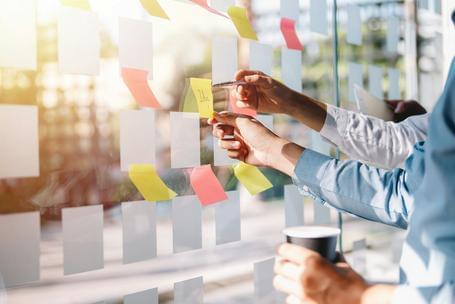
Over the last few days, I’ve been wondering how AI can help throughout the entire product creation process, from requirements gathering to delivery.
In this post, I wanted to focus on something that always creates problems and drives up costs: customer requirements and building a product backlog with real substance.
I always remember one project where we received some initial guidelines and a few technical definitions, but without any real clarity about the intended outcome.
The goal was to build a website with a “modern” frontend and an API underneath to manage a certain type of order. Time passed, and once the client finally had a clear idea of what they wanted, they said: “I want this in 3 weeks.”
Obviously, it wasn’t possible in 3 weeks. We had to do much more refinement work because, although they knew what they wanted, there were undefined use cases and the actual effort required was closer to 3 months (with all the extra pressure that created both for development and for managing the situation).
This also impacted project billing, leading to several misunderstandings based on “you told me”, “I told you”.
As we learn from everything, that experience completely changed the way I approach these kinds of situations and, reflecting on it now, I see AI as a huge opportunity.
What do teams really need? How can AI help them?
To avoid situations like this, we need clear requirements and the inputs received by the team must be well defined. If that’s not possible (for whatever reason), there should at least be traceability so they can be refined later.

So the question I ask myself (and I already suspected the answer was yes, but let’s see how far we can take it) is: Can AI generate a backlog from customer meetings? How?
Yes. If you have AI attending customer meetings, listening and transcribing requirements, it can help generate a product backlog with:
- Requirements identification. From transcripts, it can detect customer needs, expected functionalities, and technical or business constraints.
- User story generation. Transform detected requirements into user stories using the standard format:
- As a [user type],
- I want [functionality],
- so that [benefit or goal].
- Suggested prioritization. Propose an initial development order based on what the customer emphasizes, technical dependencies, or expected impact.
- Acceptance criteria inclusion. Include acceptance criteria or completion conditions when mentioned (or suggest them when implicit).
- Continuous updates after each meeting. As more meetings take place, it can keep the backlog updated, marking items as “ready for development,” “under review,” and so on.
And the next question I ask myself is: Do we still need a Product Owner acting as an intermediary if AI generates the backlog, etc.?
The answer is YES. Even though AI can automate a lot of work, it does not replace the Product Owner (PO), who:
- Makes business decisions: the PO deeply understands business needs and prioritizes the backlog accordingly.
- Negotiates and communicates with stakeholders: makes decisions when priorities conflict or when ambiguities require human judgment.
- Knows the customer: interprets intentions beyond what is explicitly stated in meetings.
- Validates deliverables: accepts or rejects delivered functionality based on business value.
- Works closely with the agile team: helps clarify requirements during development and answers questions quickly.
AI can process information quickly, organize requirements, draft user stories, detect inconsistencies or ambiguities in requirements, and help keep the backlog clean and organized. AI can collaborate with the PO, but it cannot replace their judgment and leadership.
In short: you can automate a large part of the PO’s mechanical work with AI (such as generating and updating the backlog), but you still need a human role providing leadership, judgment, and strategic vision.
Collaborative workflow between AI and the Product Owner

Here are some practical examples of how AI can work together with both the PO and the team, reducing repetitive tasks and saving time:
Before the customer meeting
- AI: prepares a smart agenda based on previous topics and pending items.
- PO: reviews the agenda and adjusts it according to the product’s strategic priorities.
During the meeting
AI:
- Transcribes in real time.
- Automatically detects and tags requirements, ideas, issues, dates, etc.
- Suggests draft user stories.
PO:
- Facilitates the meeting.
- Makes decisions when ambiguities or conflicting priorities arise.
- Clarifies details with the customer when AI cannot infer them confidently.
After the meeting
AI:
- Generates an executive summary.
- Converts requirements into user stories with acceptance criteria.
- Creates and/or updates the product backlog.
- Suggests priorities and technical dependencies.
PO:
- Validates and adjusts user stories.
- Refines the backlog with the development team if needed.
- Communicates important changes to key stakeholders.
During development
AI:
- Monitors backlog progress.
- Suggests story refinement based on progress or blockers.
- Summarizes team questions or feedback for the PO.
PO:
- Answers team questions.
- Prioritizes tasks.
- Accepts or rejects deliverables.
Tool integration architecture

This is an example of how we could assemble this whole setup, keeping in mind that tools may vary.
- Meeting capture:
- Zoom / Meet / Teams + Otter.ai or Fireflies.ai.
- Automatic transcription:
- Otter.ai, Fireflies.ai, or Whisper.
- Output: text or JSON.
- AI processing:
- AI to transform transcripts into user stories.
- Automation using Zapier, Make, or n8n.
- Backlog updates:
- Jira / Trello / Azure DevOps (REST API).
- Team communication:
- Slack / Teams / Discord for automated notifications.
Conclusion
AI promises to transform professional relationships between customers and providers by bringing more certainty, reducing misunderstandings, minimizing risks, and focusing efforts on what truly matters. Its ability to detect blockers and suggest priorities increases both efficiency and reliability in decision-making and collaboration.
Although we are still in an exploratory phase and widespread implementations are not yet common, its potential to become a turning point in this space is significant.

Raúl Martínez
Computer Engineer with 20 years of experience in application development and leading multidisciplinary teams. After 8 years at Indra, where he worked on projects for the Ministry of Education, DGT (General Directorate of Traffic), RFEF (Royal Spanish Football Federation), and SELAE (State Lotteries and Gambling), he saw Paradigma as an opportunity to continue growing and developing as a professional. Now, after 10 years at the company and having deepened his knowledge of various technologies and work methods, he looks forward to continuing to improve and learn in this wonderful profession.
View more of Raúl.More thoughts about this.
Read more.
AI Native Applications.
Running LLMs Locally with Llamafile.

Running LLMs Locally: Getting Started with Ollama.
Deep Learning about Spring AI: Getting Strarted.

Comments are moderated and will only be visible if they add to the discussion in a constructive way. If you disagree with a point, please, be polite.

Tell us what you think.